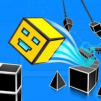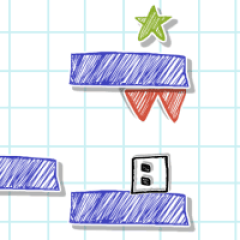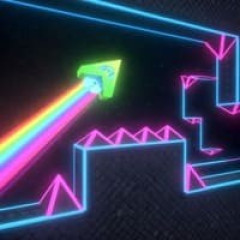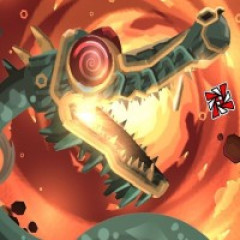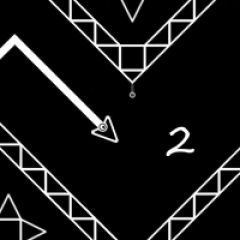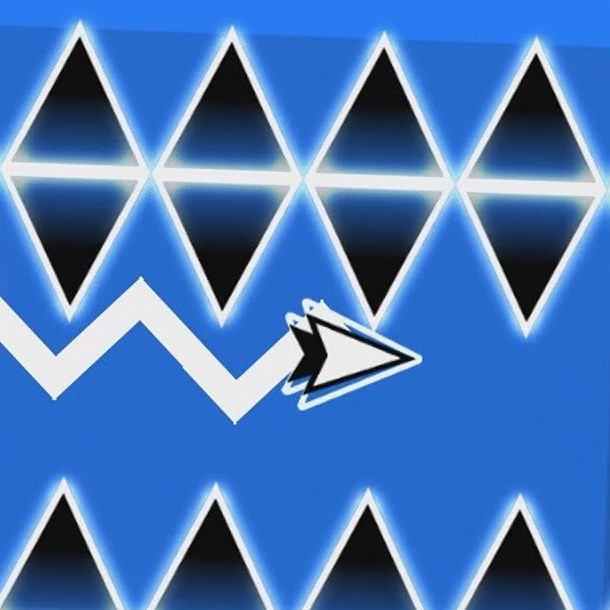
Short Life is a scary adventure game with various levels. Take control of the character to navigate through dangerous obstacles and collect stars.
Your character needs to run toward the finish line while avoiding traps that can immediately end the attempt. This game makes every trap feel much more important. A collision can cause your character's arms or legs to break, ending the run. That means you cannot simply rush forward and hope to survive. You need to observe the route and react to each obstacle. Sometimes jumping is the right answer. In other situations, crouching can help you pass underneath a hazard. Your ability to choose the correct movement at the right moment is central to the experience.
Jumping is one of your most important tools in Short Life gameplay. Spikes, bomb barrels, and other hazards can often require you to move upward rather than continue running along the ground. A well-timed jump can help you clear an obstacle without making contact. However, jumping too early can be just as dangerous as jumping too late. If you jump before you are close enough to the hazard, you may land directly on it. If you wait too long, you may not have enough time to clear the obstacle. Try to observe the distance between your character and the trap before committing to a jump. With practice, you can develop a better sense of when to leave the ground.
Jumping is not always the safest option. Some situations are better handled by crouching. If a dangerous object occupies the space above your character while the path underneath remains clear, lowering your body can help you pass through safely. This is particularly useful when you encounter obstacles that require you to stay low rather than move upward. The key is to avoid relying on one movement technique for every situation. Short Life's levels are designed around different hazards, so you need to adapt your movement to what appears ahead.
The biggest challenge in Short Life comes from its wide variety of traps. Each hazard can force you to change your timing and movement.
Bomb barrels can make a seemingly straightforward section dangerous. You need to pay attention to their position and determine how you can pass without making contact. Cannons add another threat because you cannot simply focus on what is directly in front of your character. You need to remain aware of the obstacle layout and react carefully as you move through the level. Level 2, for example, features many bomb barrels and cannons. This makes it a useful example of how the game can build a level around a particular group of hazards. When facing these obstacles, avoid rushing blindly. A small adjustment to your movement can be the difference between reaching the next section and restarting the level.
Spikes are classic platform-game hazards, but in Short Life they are particularly dangerous because contact can end your run. Buzzsaws create another serious threat. Their presence means you need to pay close attention to both your vertical and horizontal movement. Level 7 features many buzzsaws, creating a stage where precise movement becomes especially important. When you see a series of buzzsaws ahead, focus on the available safe space rather than simply trying to move as quickly as possible. Identify where your character needs to be and choose your jump or crouch accordingly.
Laser beams are another hazard you need to avoid. They add variety to the obstacle courses and prevent you from relying on a single strategy throughout the game. The game also includes other dangerous obstacles, so you should always examine the route before deciding how to move. The safest approach is to treat every new section as a fresh problem. Look at the hazard, consider the available space, and then choose your movement..
Like Geometry Dash Spam, this game also features many interesting levels. You must complete 16 levels, and each one features a different series of obstacles. The difficulty varies between stages, so you cannot assume that a strategy that worked in one level will work everywhere. Level 2 contains many bomb barrels and cannons, while Level 7 includes numerous buzzsaws. These differences encourage you to adapt rather than memorize one universal approach.
Every level presents its own arrangement of dangers. One stage may require you to focus heavily on explosive hazards and cannons. Another may force you to pay closer attention to buzzsaws. Other levels can combine different obstacles and require more careful movement. Before starting a new section, take a moment to understand what you are facing. Ask yourself:
These questions can help you make better decisions without relying entirely on trial and error.
Short Life also rewards speed. If you can reach the finish line in a shorter time while remaining unharmed, you can aim for a higher score. However, speed should come after control. When you are learning a level, focus first on surviving the obstacles. Once you understand the route, you can begin refining your timing and reducing unnecessary pauses. This two-step approach can be more effective than trying to achieve your fastest possible run immediately.
Short Life includes a hero store where you can purchase six different characters at different prices. The stars you collect during your runs can be used to buy your favorite character.
Because the characters have different prices, you may want to think about how you spend your collected stars. If you have a specific character in mind, saving enough stars for that purchase can give you an additional progression goal. The store also gives completed levels another purpose. Even after you have learned a stage, replaying it and collecting its stars can help you work toward a new character.
This creates a simple loop: survive the level, collect stars, improve your score, and use your rewards to expand your character options.
If you want to improve your Short Life strategy, focus on consistency before speed.