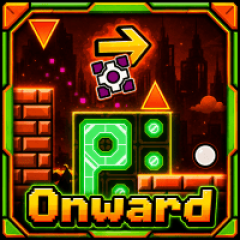
Challenge yourself in a thrilling adventure in Geometry Dash Onward now. Switch forms, control gravity, dodge deadly obstacles, and survive to the end.
The gameplay in this adventure game is built around continuous transitions. Each portal changes your character or movement style, so you have to recognize what is coming next and adjust immediately. Learning the role of every portal and obstacle can make the game feel much more manageable.
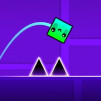
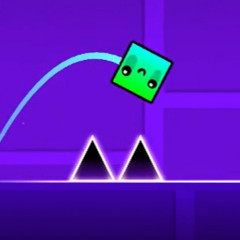
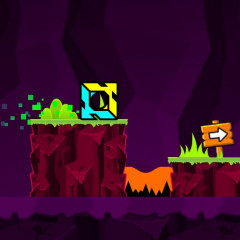
At the beginning, you control the familiar cube character. The opening section introduces a speed portal, increasing your movement speed and reducing the amount of time available to react to upcoming obstacles. Soon after the speed increase, you need to hit a jump pad to launch onto a high platform. This sequence is important because it establishes the fast rhythm used throughout the game. Instead of making slow, deliberate movements, you need to anticipate the next obstacle before your cube reaches it. The game then places double spikes and buzzsaws in your path. You can avoid these hazards by jumping at the right moment or using gravity changes when the game provides them. Because your movement becomes faster after passing the speed portal, pressing too early or too late can quickly send you into an obstacle.
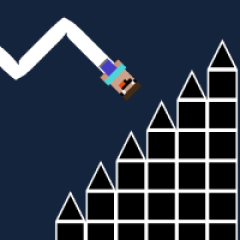
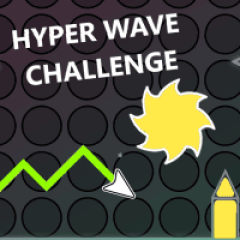
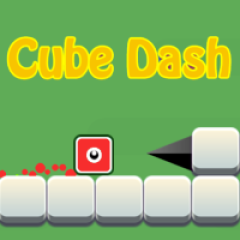
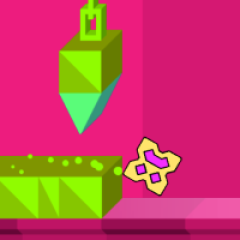
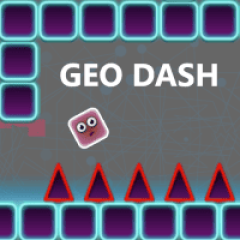
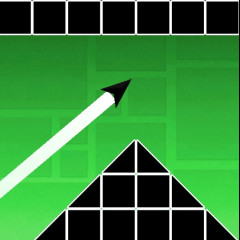
Cube character jumping over spikes in Geometry Dash Onward
The next major change comes through a size portal, transforming your character into a mini cube. The smaller form changes the feel of the game and requires you to pay closer attention to the available space. As a mini cube, familiar obstacles can become more difficult because your movement and positioning feel different. Rather than assuming that your previous timing will work, watch the spacing between platforms and hazards carefully. This section rewards controlled inputs. Rapid or unnecessary clicks can make it harder to maintain a consistent rhythm, especially when spikes or buzzsaws appear close to your landing area.
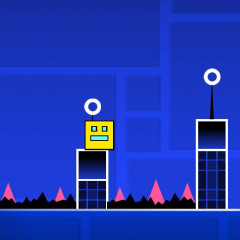
After the mini-cube section, you enter a ball portal and transform into a ball. This is one of the more distinctive portions of Geometry Dash Onward because the ball relies heavily on gravity manipulation. Your objective is to pass through multiple gravity rings and repeatedly invert your gravity while avoiding single spikes. Instead of simply jumping over obstacles, you need to understand when your character will switch between the floor and ceiling. The key here is anticipation. When approaching a gravity ring, consider where the next obstacle is positioned. It needs to place you in a safe position for the following section.
After the ball sequence, you pass through another cube portal and return to cube form. This time, the objective is to slide along the ground until you reach a robot portal. Compared with the earlier cube section, this part places greater emphasis on maintaining your position while moving toward the next transformation. You should avoid unnecessary actions and focus on staying on the ground safely. The robot portal marks another significant change in movement.
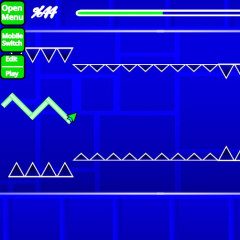
Once you enter the robot portal, your character becomes a robot. The robot section requires you to use multiple jump pads and jump rings to perform high jumps. The challenge is not simply jumping as high as possible. You need to time your inputs so that the robot clears the red buzzsaws placed along the route. A poorly timed jump can leave you too low to clear an obstacle or send you into another hazard on the way down. Try to identify the height and distance required for each jump before committing to your next input. The robot's movement can feel more flexible than the standard cube, but that flexibility can also make overcorrection easier. The red buzzsaws provide clear visual warnings, so use them as timing references. Instead of reacting at the last second, prepare your jump based on their location.
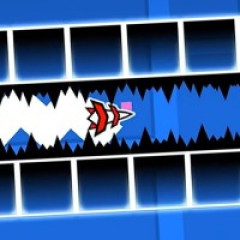
The next portal changes your character into a ship, shifting the gameplay from ground-based movement to controlled flight. As the ship, you need to fly between pillars while navigating through gravity portals. This section demands smooth control because small changes in altitude can determine whether you safely pass through a narrow gap or collide with an obstacle. Avoid making large, sudden movements unless the game clearly requires them. Smooth adjustments usually give you more control over your position, especially when the path becomes narrow. The gravity portals add another layer of difficulty because they can change how your ship moves through the upcoming section. Keep your attention on the next gap rather than focusing only on the portal itself.
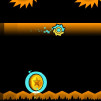
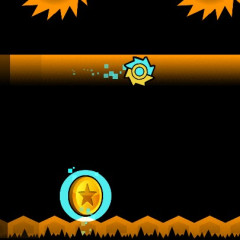
Following the ship section, you enter a UFO portal and take control of a UFO. The UFO section introduces additional speed portals, causing the action to become even faster. At higher speeds, reaction time becomes limited. This means you need to rely more heavily on memorization and anticipation. If you have already reached this point several times, remember where the major obstacles appear and prepare your movement before reaching them. The UFO section can feel especially demanding because the increased speed leaves less room for hesitation. Stay focused on the upcoming path and avoid making unnecessary inputs.
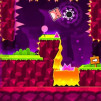
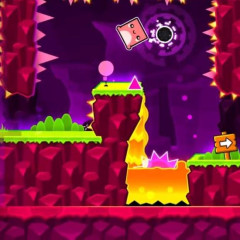
Finally, you become a cube who must jump across structures and small blocks while avoiding spiky traps and lava pools. The platforms may provide only limited space for landing, so precision becomes increasingly important. Lava pools create a different kind of danger from spikes. Instead of simply avoiding a sharp object, you need to ensure that your landing position gives you enough room to continue moving safely. Small blocks can also make your timing less forgiving. A jump that would be safe on a large platform may fail if you land too close to an edge. Do your best to reach the finish line.
How to control: Left-click or W key = Jump or fly up.
Pay attention to every portal because it changes your movement style, size, gravity, or speed. Knowing what comes next gives you time to adjust. Buzzsaws, spikes, platforms, pillars, and lava pools provide useful references. Use their positions to determine when to jump, change gravity, or adjust your flight path.
When the route is straightforward, additional clicks can create problems. Make only the movements necessary to stay on the correct path. If one section consistently causes failures, focus on understanding its rhythm. Repeating the same sequence can help turn unfamiliar timing into muscle memory.
Speed portals are especially important in this game. After your character accelerates, expect obstacles to arrive sooner and adjust your timing accordingly. The final cube section may feel easier because you have already completed most of the game, but that can lead to careless mistakes. Maintain the same concentration until you cross the finish line.
Geometry Dash Onward was created by Destriv. Like Geometry Dash Extrapolation, this game also features the Hard difficulty. You can play this platform game in a web browser on PC and mobile devices, which is similar to Geometry Dash Glow Essence.