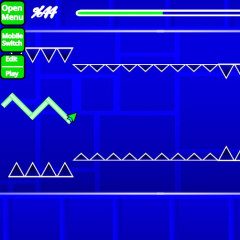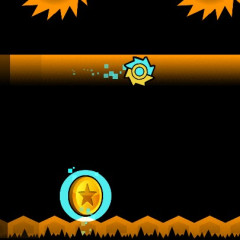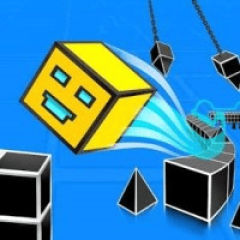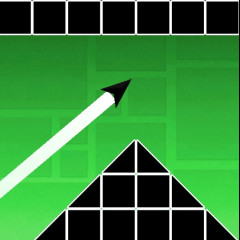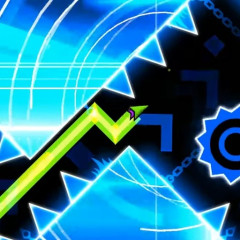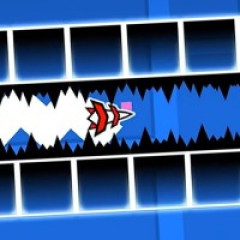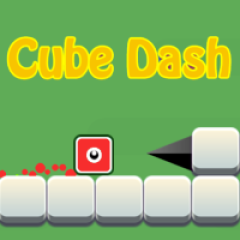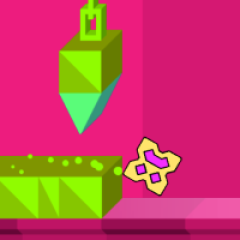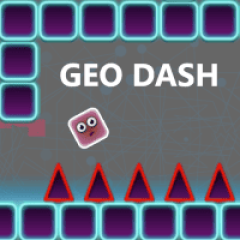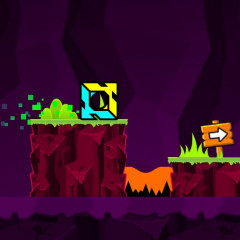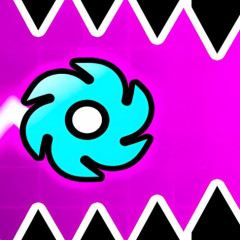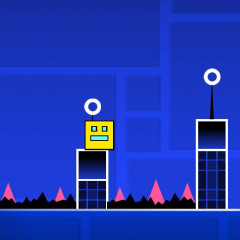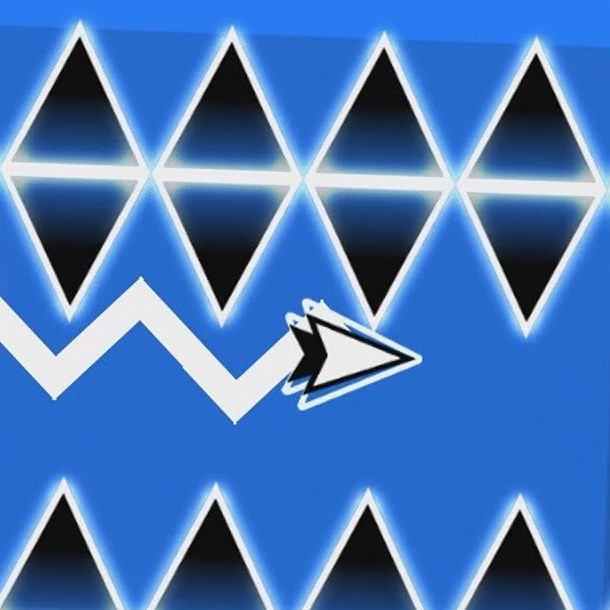
Geometry Dash Demons is a great platform game offering a new and exciting adventure. Switch between ball, cube, and ship gameplay, and overcome gravity traps.
This game takes the familiar rhythm-based challenge of Geometry Dash and builds it around a carefully structured sequence of movement, gravity, and timing. Instead of relying on one type of gameplay from beginning to end, the level moves through ball, cube, and ship sections, giving you a changing set of challenges as you progress from the opening percentage to the final stretch. The game is classified as Easy Demon, so you know from the beginning that the course is designed around a demanding but approachable demon-level challenge. Your success depends on adapting to each section rather than treating the entire level as one continuous type of obstacle. This structure gives Geometry Dash Demons a distinct rhythm. Every section asks you to adjust your expectations, recognize the current form, and react to its specific mechanics.
The easiest way to understand this running game is to look at the level as a sequence of five different gameplay phases. Each phase occupies roughly one-fifth of the level, but the challenges within those sections are not identical. You begin with the ball, move to the cube, return to the ball, switch to the ship, and then finish with the cube and a fast ship sequence. This constant movement between forms means you need to stay aware of the current section instead of relying on one familiar input pattern.
The first section introduces you to the ball mechanics. From 0% to 20%, gravity changes play a central role, and you also need to interact with orbs and pads. This opening section establishes the level's main theme: gravity can change the way you move. Instead of simply following a predictable path, you need to understand how each gravity change affects your movement and how the available inputs fit into the sequence. The orbs and pads are also part of this opening challenge. You need to pay attention to when an input is required and respond appropriately as the ball moves through the section. Because this is the first part of the level, it also serves as an introduction to the specific rhythm of Geometry Dash Demons. You can use this section to become familiar with how the level handles its gravity-based movement before reaching the later sections.
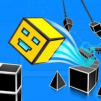
At 21%, the gameplay changes significantly. You move from the ball into a mirrored cube sequence that lasts until 40%. Compared with the gravity-focused ball section, this part uses straightforward jumps. The simplicity of the jumps does not mean you should stop paying attention. The mirrored nature of the sequence means you need to stay focused on the movement pattern while maintaining accurate timing. The transition from ball to cube is itself important. You are moving from one type of movement to another, so you need to adjust your approach quickly. The cube section provides a noticeable contrast to the opening. Rather than dealing primarily with gravity changes and orb or pad inputs, you are now working through jumps in a mirrored sequence.
The ball returns at 41%, but this time the section introduces gravity portals and a reverse gravity trap. The segment continues through 60%. This is an important distinction from the opening ball section. Although you are controlling the same form, the challenge has changed. You now have to account for gravity portals and a trap involving reverse gravity. The second ball section therefore tests whether you can adapt to a more complicated gravity sequence after already experiencing the basic concept earlier in the level. The reverse gravity trap is especially important to recognize. Your movement expectations can change quickly when gravity reverses, so you need to remain attentive rather than assuming the ball will continue behaving exactly as it did moments earlier.
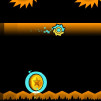
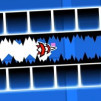
At 61%, the level changes again. You enter a ship sequence that continues through 80%. This section introduces invisible pillars and gravity switches, creating a different type of challenge from both ball sections and the mirrored cube sequence. Invisible pillars mean that you need to rely on your understanding of the sequence rather than simply expecting every obstacle to be visually obvious. Gravity switches add another layer of movement adjustment. The ship section is therefore about adapting to a new form while also dealing with hidden structural elements and changing gravity.
The first part of the final section returns to the cube. However, the jumps are rapid, creating a different feeling from the straightforward jumps used between 21% and 40%. You have already experienced the cube earlier, but the faster jump sequence requires you to adjust your timing. The return of the cube gives the level a more demanding final cube sequence. Because this occurs after the ball and ship sections, you also need to transition back into cube movement without losing your rhythm.
The level concludes with a ship segment at triple speed. This final sequence provides a sharp increase in pace. After working through multiple forms and gravity changes, you must adapt to the faster ship section and maintain control until the level reaches 100%. The triple-speed ship segment gives the ending a clear sense of escalation. The challenge is no longer only about knowing what form you are using. You also need to adjust to the increased speed.
Like Geometry Dash Endorphin Rush, the game is also officially presented as an Easy Demon, which places its challenge within the demon category while identifying it at the easier end of that difficulty group. That classification gives you useful context before attempting the level. You should still expect a level that requires concentration and accurate execution, but the supplied design focuses on recognizable mechanics such as jumps, gravity changes, portals, pads, orbs, and ship movement. The variety is arguably one of the defining characteristics of this Geometry Dash challenge. Rather than concentrating on one mechanic, the level asks you to switch between several.
Geometry Dash Demons stands out through its deliberate combination of ball, cube, and ship gameplay. The level does not stay locked into one movement style. Instead, it guides you through five distinct sections, each introducing its own mechanics and timing demands. The opening ball section teaches you to work with gravity changes, orbs, and pads. The mirrored cube sequence provides straightforward jumps. The second ball section adds gravity portals and a reverse gravity trap. The ship sequence introduces invisible pillars and gravity switches. Finally, rapid cube jumps lead into a triple-speed ship ending. Because the level is classified as an Easy Demon, you can approach it as a demon challenge built around a varied but clearly defined set of mechanics. The most useful way to understand the level is to recognize its structure. Know which form you are controlling, understand what changes when gravity switches, and prepare for the increased speed at the end. If you enjoy Geometry Dash levels that move between different gameplay forms rather than relying on one mechanic from beginning to end, Geometry Dash Demons offers a compact challenge built around variety, transitions, and changing movement conditions. Your goal is simple: stay focused through every section, adapt when the gameplay changes, and make it all the way from 0% to 100%.