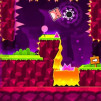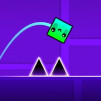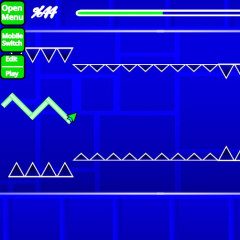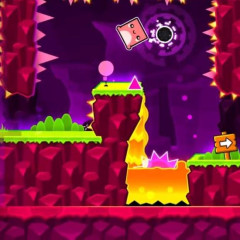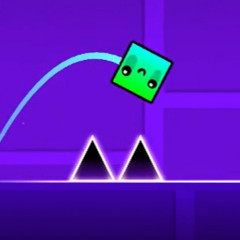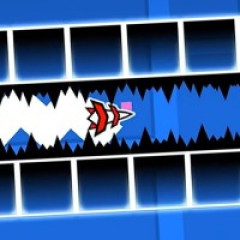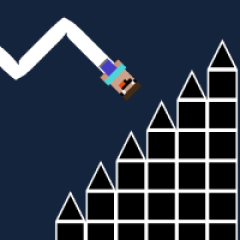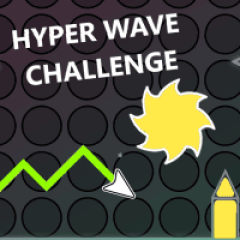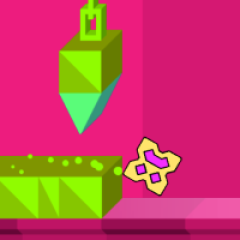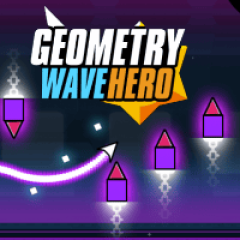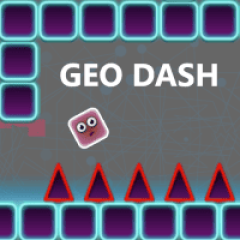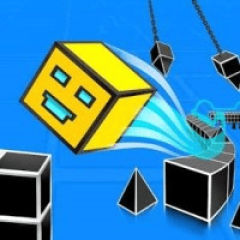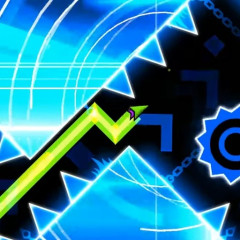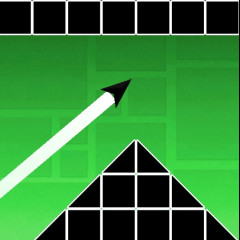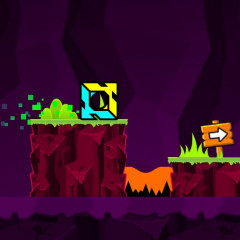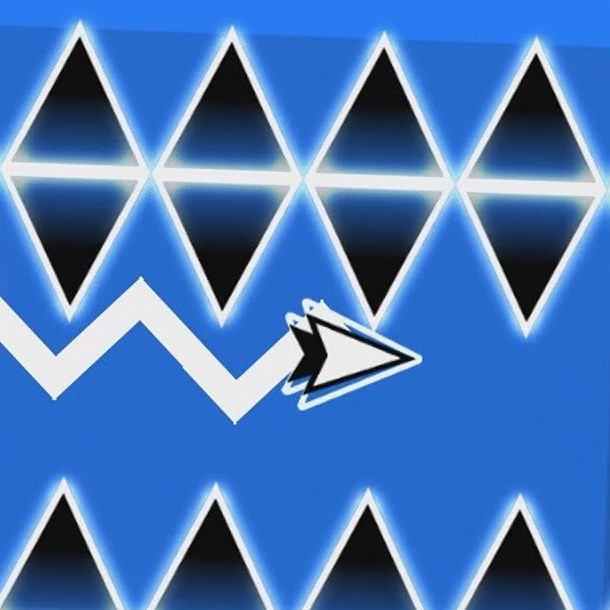
Geometry Vibes 2 is the second installment of the Geometry Vibes series. Guide an arrow character to reach the finish line or race with other players.
The controls remain familiar, allowing you to immediately understand the basic objective if you have played the first game. Your arrow moves through geometric environments filled with hazards. Your job is to avoid every spike, wall, and trap while making your way toward the finish portal. The concept sounds simple, but the speed of the game makes precision extremely important. You need to react at the right moment rather than simply holding a direction and hoping for the best.
The sequel offers four main ways to play: Classic Mode, Infinity Mode, Multiplayer Mode, and Race Mode. Each mode changes the way you approach the game's core mechanics. Classic Mode gives you a structured progression through 20 levels, while Infinity Mode focuses on distance. Multiplayer and Race Mode add competitive elements, allowing you to test your reflexes against other people. This variety is one of the main differences between Geometry Vibes 2 and its predecessor.
Classic Mode provides a clear progression through 20 increasingly difficult levels. The objective is to reach the end of each course without hitting an obstacle. As the difficulty increases, your timing and movement need to become more precise. The 20-level structure gives you a defined goal. Instead of simply playing until you decide to stop, you have a series of stages to work through. For anyone familiar with the original Geometry Vibes, Classic Mode also provides an easy starting point because the fundamental movement system remains recognizable.
Infinity Mode changes the focus from completing a fixed collection of stages to reaching the greatest distance possible. There is no specific final level that you need to reach. Instead, your objective is to survive for as long as possible and see how far your reflexes can take you. This creates a different type of challenge from Classic Mode. Rather than concentrating on completing one defined course, you need to maintain your focus over a longer run. The longer you survive, the more important consistency becomes. A single mistake can end your run, making every movement meaningful.
The most significant new feature in the sequel is Geometry Vibes 2 multiplayer. The original experience focused primarily on solo gameplay, while Geometry Vibes 2 Online introduces competition against other people. You can challenge random opponents from around the world or create a private room to play with a friend. This addition changes the atmosphere considerably. The goal remains based on the same movement mechanics: navigate the course without hitting obstacles. However, the presence of other competitors gives every mistake greater significance. A small delay or poorly timed movement can allow your opponent to gain an advantage. This makes online multiplayer a natural extension of the game's core mechanics. The controls do not need to change dramatically because the competitive element comes from comparing your performance with someone else's.
If competing against random opponents is not what you want, Geometry Vibes 2 Online also allows you to create a private room for a friend. This gives you a more personal way to experience the multiplayer side of the game. You can challenge someone you know without relying on a random matchmaking experience. For friends who enjoy quick competitive games, the private-room option provides an easy way to turn the reflex challenge into a head-to-head contest.
Race Mode offers another multiplayer option for people who want to compete together using the same device. You and your friends can join the race locally, with support for up to four players. Each person can control the character on the same device, creating a more immediate and social form of competition. This makes Race Mode noticeably different from online Multiplayer Mode. Online multiplayer connects you with opponents around the world, while Race Mode focuses on local competition with friends. Playing locally can change the experience even though the fundamental objective stays the same. You already know that a mistimed movement can cause a crash. When several people are competing on the same device, however, every mistake becomes part of a shared race. The result is a more social interpretation of the game's fast-paced mechanics.
This game is easy to learn, but becoming consistent requires practice. The most important principle is simple: guide your arrow to the end of the course without touching spikes, walls, or other obstacles. The controls themselves are not complicated. The difficulty comes from timing your movement correctly.
It can be tempting to focus entirely on moving quickly, particularly when you are racing another person. However, speed without control can lead to unnecessary mistakes. Instead, concentrate on the timing of each movement. Watch the upcoming section of the course and prepare for obstacles before reaching them. Reacting too late can leave you with very little room to recover. Over time, you can develop a better sense of when to make each movement.
Crashing is part of learning a game built around precision. When you hit an obstacle, consider what caused the mistake. Did you react too late? Did you move too far? Did you fail to anticipate the next obstacle? Identifying the problem is more useful than simply trying the same movement again without changing anything. This approach is particularly valuable in Classic Mode, where you can gradually become more familiar with increasingly difficult levels.
PLAYER 1:Left mouse button or the spacebar = Fly up.
PLAYER 2: Up arrow key = Fly up.
PLAYER 3: H key = Fly up.
PLAYER 4: L key = Fly up.
For anyone who has played the original, one obvious question is how Geometry Vibes 2 differs from Geometry Vibes. The sequel keeps the original game's movement system and visual identity, so the transition is relatively natural. You do not need to relearn the entire game before starting. However, the amount of content and the available ways to play have been expanded significantly. The original Geometry Vibes features 10 Classic levels and an Endless Mode. Geometry Vibes 2 increases Classic Mode to 20 levels, replaces Endless Mode with a more dynamic Infinity Mode, expands customization, and introduces online multiplayer. The second game also adds Multiplayer Mode, which gives you the opportunity to race against other people.
Improving at this adventure game is largely about developing reliable timing and learning to stay calm when the course becomes more difficult.