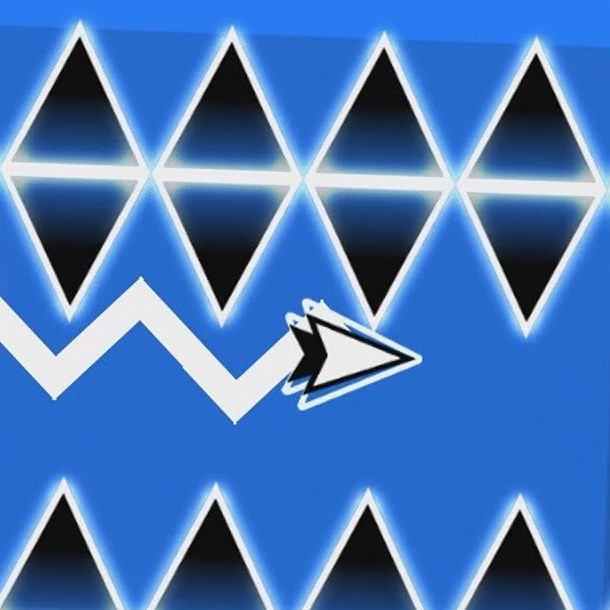
Ready for a fast-paced challenge in Rolling Sky. This adventure game requires you to tap to move your ball, avoid traps, and beat your highest score.
Like Slope Run, this running game also requires you to control a ball to navigate through dangers. You guide the ball by tapping the screen and moving it from side to side. The goal is to follow the floating path while avoiding anything that can knock the ball off course. At the same time, you need to pay attention to the rhythm. The game's music can help you anticipate movement and maintain a consistent pace.
The path is your safest guide through each section. Keep your attention focused several steps ahead rather than looking only at the ball itself. This gives you more time to recognize upcoming hazards and decide which direction to take. The further you progress, the more important anticipation becomes. A sudden obstacle can appear while the ball is already moving quickly, leaving very little time for correction. Instead of reacting only when a hazard reaches you, try to recognize its position as early as possible.
A tap can shift the ball toward a different part of the path, helping you avoid obstacles or line yourself up with the next section. Small movements are often easier to control than dramatic ones. If you move too aggressively, you may accidentally send the ball off the platform. As you become familiar with the controls, you can begin making faster movements while maintaining better control.
A major part of Rolling Sky gameplay is avoiding hazards. The supplied game information includes a large variety of obstacles, ranging from mechanical traps to natural objects and electronic hazards. These obstacles can appear along the path and require you to adjust your movement quickly. Some of the hazards include:
This variety helps keep the route unpredictable. You cannot rely on a single movement pattern for every section.
Checkpoints provide important milestones during the adventure. Reaching a checkpoint means you have successfully navigated a section of the course and can continue toward the next challenge. They also help break a long route into smaller goals. Instead of thinking about the entire level at once, you can concentrate on reaching the next checkpoint safely. This can make difficult stages feel more manageable. As the game introduces harder obstacles and faster movement, these milestones become especially useful for maintaining your focus.
How to control: Hold the left mouse button to control the ball to move to the left or right.
Music is one of the most distinctive elements of Rolling Sky. The soundtrack includes different musical styles and sounds, including piano, guitar, drums, and environmental effects. These sounds help create the atmosphere of each adventure while also giving you a rhythm to follow. Instead of relying exclusively on visual information, you can use your hearing to support your reactions. This is why the game encourages you to trust your ears as well as your fingers and eyes.
Listening to the beat can help you establish a sense of timing. When the music has a clear rhythm, you may naturally begin to associate certain movements with particular beats. This can make the ball's movement feel more synchronized with the environment. You do not need to consciously count every beat. Simply paying attention to the music can make the experience feel more intuitive. That relationship between music and movement is one reason Rolling Sky can feel similar to rhythm-based games while still remaining a traditional arcade ball challenge.
The music also contributes to the tension. As you move quickly through the level, the combination of speed, obstacles, and rhythm keeps your attention focused. A familiar pattern can suddenly change when a new obstacle appears, forcing you to react while maintaining the flow. The result is a game where sound and movement work together instead of feeling like separate features.
Like Roller Baller, the game also uses colorful graphics and 3D environments to create a series of imaginative routes. You may find yourself rolling through settings inspired by jungles, seas, temples, and other puzzle-like worlds. The floating paths give the game a distinctive sense of scale. The ball may appear to be racing through an open space with nothing beneath it, making every missed turn feel more significant.
If you want to make better progress in this speed game, start by focusing on control rather than speed. Learn how the ball responds to each tap and practice making small adjustments. Once your movements feel natural, you can begin reacting to obstacles more quickly. Listening to the soundtrack can also help. Instead of treating the music as background noise, let the rhythm become part of your concentration. Most importantly, look ahead.
The game specifically encourages you to use your ears and fingers alongside your eyes. Visual information tells you where the path and obstacles are, while the music provides another rhythm-based cue. Using both forms of information can make your reactions more consistent.
If you repeatedly fail at the same type of obstacle, pay attention to what happens immediately before the mistake. Perhaps you are moving too early. Maybe your tap is too strong, or you are focusing on the ball instead of the upcoming path. Small adjustments can make a noticeable difference. With practice, a section that once seemed impossibly fast can become much easier to read.