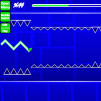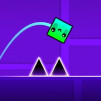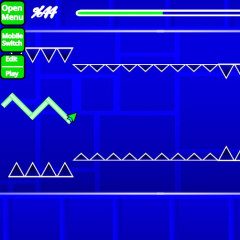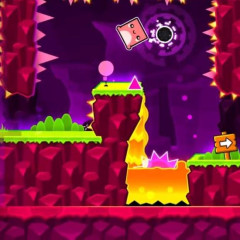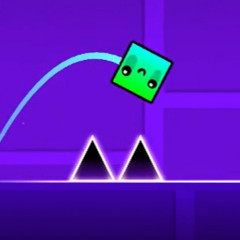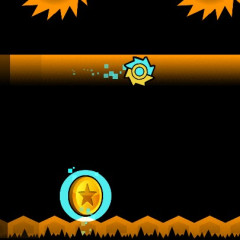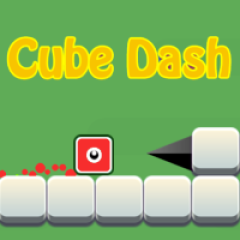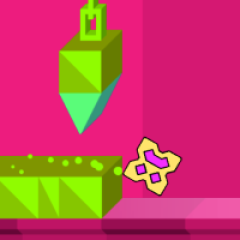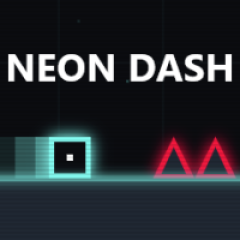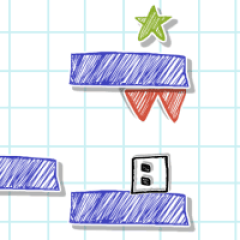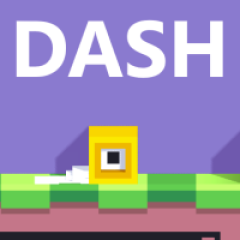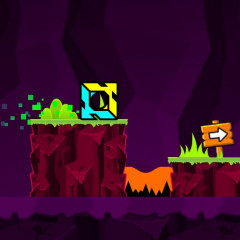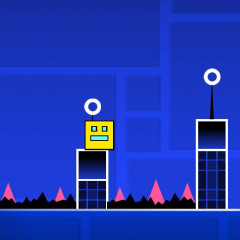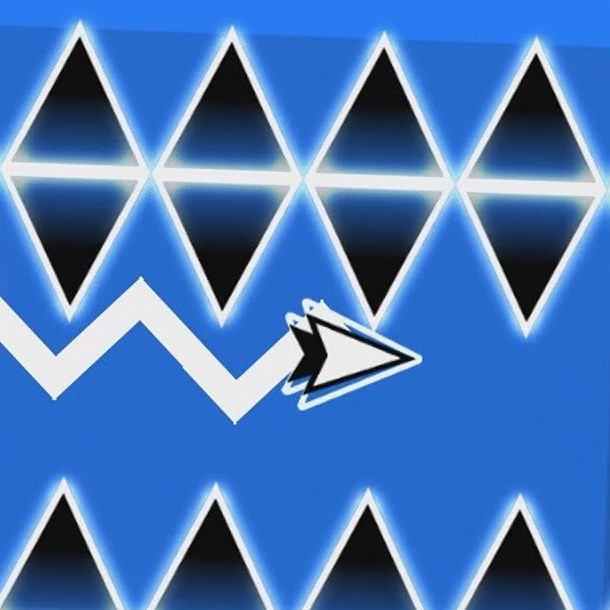
Geometry Vertical is an engaging adventure game with two game modes. Reach the finish line at the top of every level while avoiding countless deadly hazards.
The gameplay appears simple at first. Your character automatically moves forward, leaving you responsible for changing its direction at exactly the right moment. While the controls are easy to understand, every level introduces new challenges that demand increasingly accurate timing. Instead of fighting enemies or collecting power-ups, success depends almost entirely on your ability to react quickly and make split-second decisions. One poorly timed click can result in failure, sending you back to your latest checkpoint. This straightforward design makes the game accessible to beginners while still providing enough challenge for experienced platform game enthusiasts.
Inspired by Geometry Jump 2, the core gameplay in Geometry Vertical also revolves around navigating hazardous environments without colliding with obstacles. Every stage presents a carefully designed sequence of challenges that require concentration from start to finish. Your character continuously advances, meaning there is very little time to hesitate before making a move. Players must constantly anticipate upcoming hazards while adjusting their movement to avoid danger. Unlike slower puzzle games, every action in Geometry Vertical happens at high speed, creating an exciting sense of momentum throughout each level.
One of the strengths of the Geometry Vertical game is its approachable control system. Using only the mouse, players can guide their character by switching movement directions at the appropriate moments. Although the controls are intentionally simple, the game's difficulty comes from how those controls interact with increasingly complex level layouts. As players progress, they must navigate:
Each obstacle requires careful timing rather than random movement. Because levels become progressively harder, players naturally improve their reaction speed through repeated attempts.
This game automatically pushes the character forward. This design removes unnecessary complexity while increasing the importance of precision. Since the character never stops moving, players must continuously analyze the environment and prepare for upcoming hazards. This creates a satisfying gameplay loop where every successful run feels earned through skill rather than luck.
How to control: Left-right arrow keys = Change the lane.
One of the most interesting mechanics in Geometry Vertical is the portal system. Throughout each level, players encounter portals that transform both the character and the control scheme. These transformations force players to quickly adapt instead of relying on a single movement pattern.
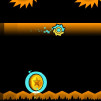
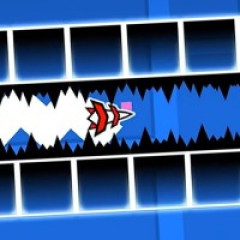
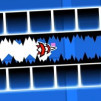
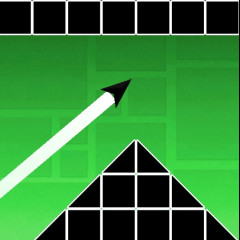
As you travel through a stage, portals can convert your character into entirely different forms. Each form introduces unique movement mechanics that require new strategies. For example, while the standard character switches directions using left and right mouse clicks, transforming into a plane changes everything. Instead of clicking alternately, players must:
This seemingly small adjustment dramatically changes how players approach obstacle navigation. Learning each transformation becomes essential for completing later stages successfully.
The portal system ensures that no two sections of a level feel identical. Players cannot simply memorize obstacle positions. They must also adapt to new movement mechanics whenever transformations occur. This variety prevents gameplay from becoming repetitive while continually testing both reflexes and adaptability. Mastering every transformation is one of the keys to becoming proficient at Geometry Vertical.
Every level in Geometry Vertical is filled with carefully placed hazards designed to challenge players' precision. Rather than overwhelming players with random obstacles, the game presents structured patterns that reward observation and practice. Common hazards include:
Each obstacle teaches players something new about movement timing and positioning. As the difficulty increases, combining multiple hazards creates sequences that require flawless execution. The game's challenge comes not from unfair mechanics but from demanding consistent accuracy throughout every level.
Like Geometry Dash Spam, this game also offers two game modes.
Normal Mode offers the complete gameplay experience exactly as intended. Players must complete each level while relying on their reaction speed, timing, and understanding of every obstacle. Progress requires patience and continuous improvement, making every completed stage feel satisfying.
Practice Mode provides a less stressful environment where players can learn level layouts before attempting a perfect run. Instead of worrying about repeated failures, players can focus on understanding:
For beginners, Practice Mode is an excellent way to build confidence before tackling the game's more demanding challenges. Even experienced players often use Practice Mode to refine difficult sections and improve consistency.
Although quick reactions are essential, experienced players know that success comes from combining observation with consistent practice. Here are several useful strategies for improving your gameplay.
Instead of reacting randomly, pay attention to recurring obstacle arrangements. Many difficult sections become much easier after recognizing the sequence of hazards.
Panicking often leads to unnecessary mistakes. Keeping steady control over your movements helps maintain accuracy even during high-speed sequences.
Each transformation changes the gameplay. Spend time understanding how every form responds before attempting more difficult levels. The better you understand the controls, the easier it becomes to adapt when portals appear unexpectedly.
Practice Mode is more than just an easier difficulty. It provides an opportunity to memorize challenging sections without the pressure of completing an entire level. Repeating difficult areas until they become automatic is one of the fastest ways to improve.
As you replay levels, your hands gradually learn the required timing. Rather than forcing every movement consciously, allow repeated practice to build natural rhythm and consistency.
Geometry Vertical delivers an exciting platform experience built around precision, quick reflexes, and continuous improvement. Its intuitive controls make the game easy to start, while increasingly demanding levels provide long-term challenge for players who enjoy mastering difficult mechanics. With automatic movement, dynamic character transformations, carefully designed obstacles, helpful checkpoint systems, and both Normal Mode and Practice Mode, the game offers a balanced experience suitable for beginners and experienced platform fans alike. If you're searching for a fast-paced platform game that rewards practice, concentration, and skillful execution, Geometry Vertical is well worth adding to your list of games to play.